About the Journal
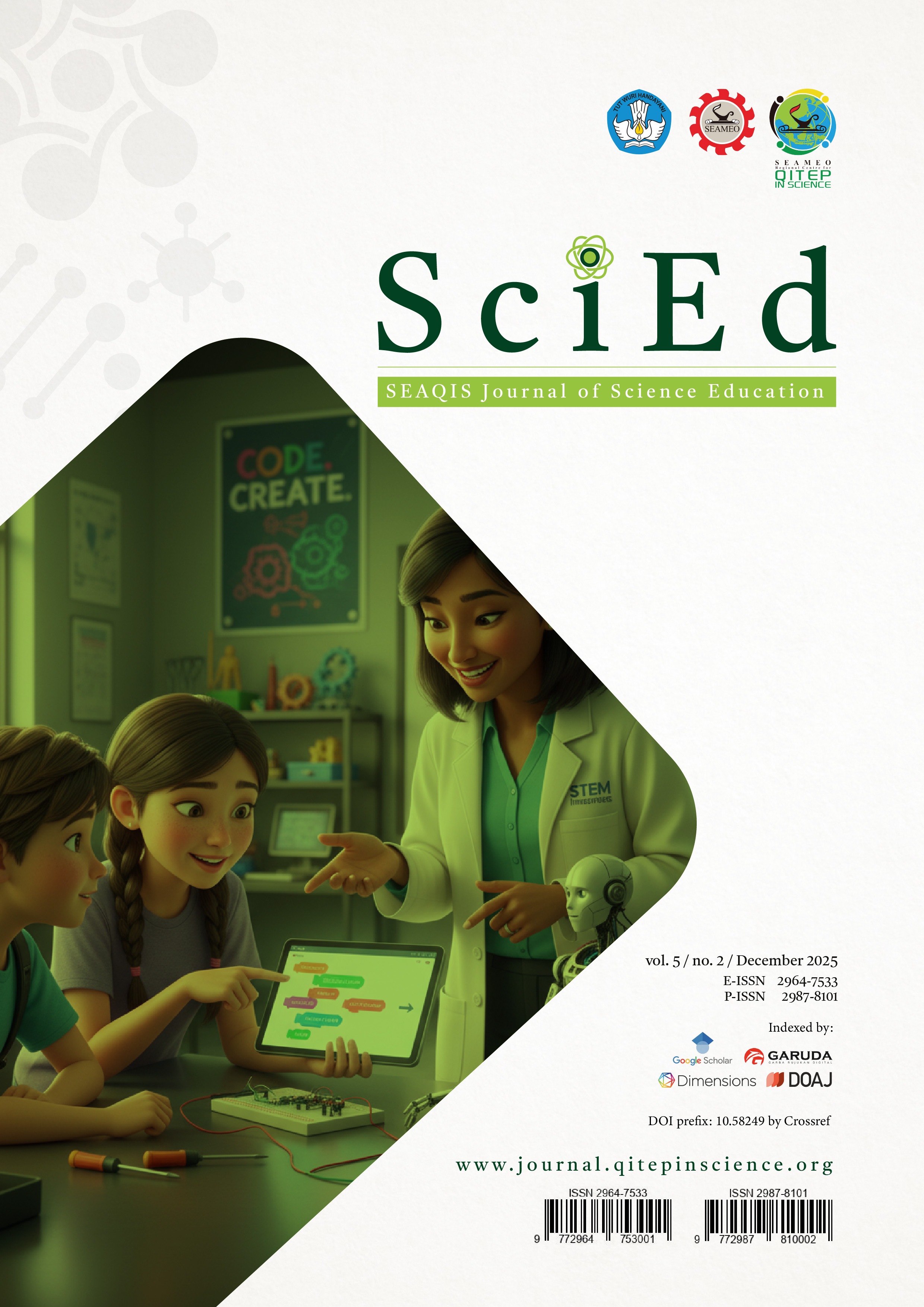
SEAQIS Journal of Science Education is a scientific publication issued by Southeast Asian Ministers of Education Organisation (SEAMEO) Regional Centre for Quality Improvement of Teachers and Education Personnel (QITEP) in Science. It publishes articles in the area of science education, including research articles and review articles.
Indexed by: Google Scholar | Garuda | DOAJ | Dimensions
DOI prefix: 10.58249 by Crossref
Current Issue
Vol. 6 No. 01 (2026): SEAQIS Journal of Science Education
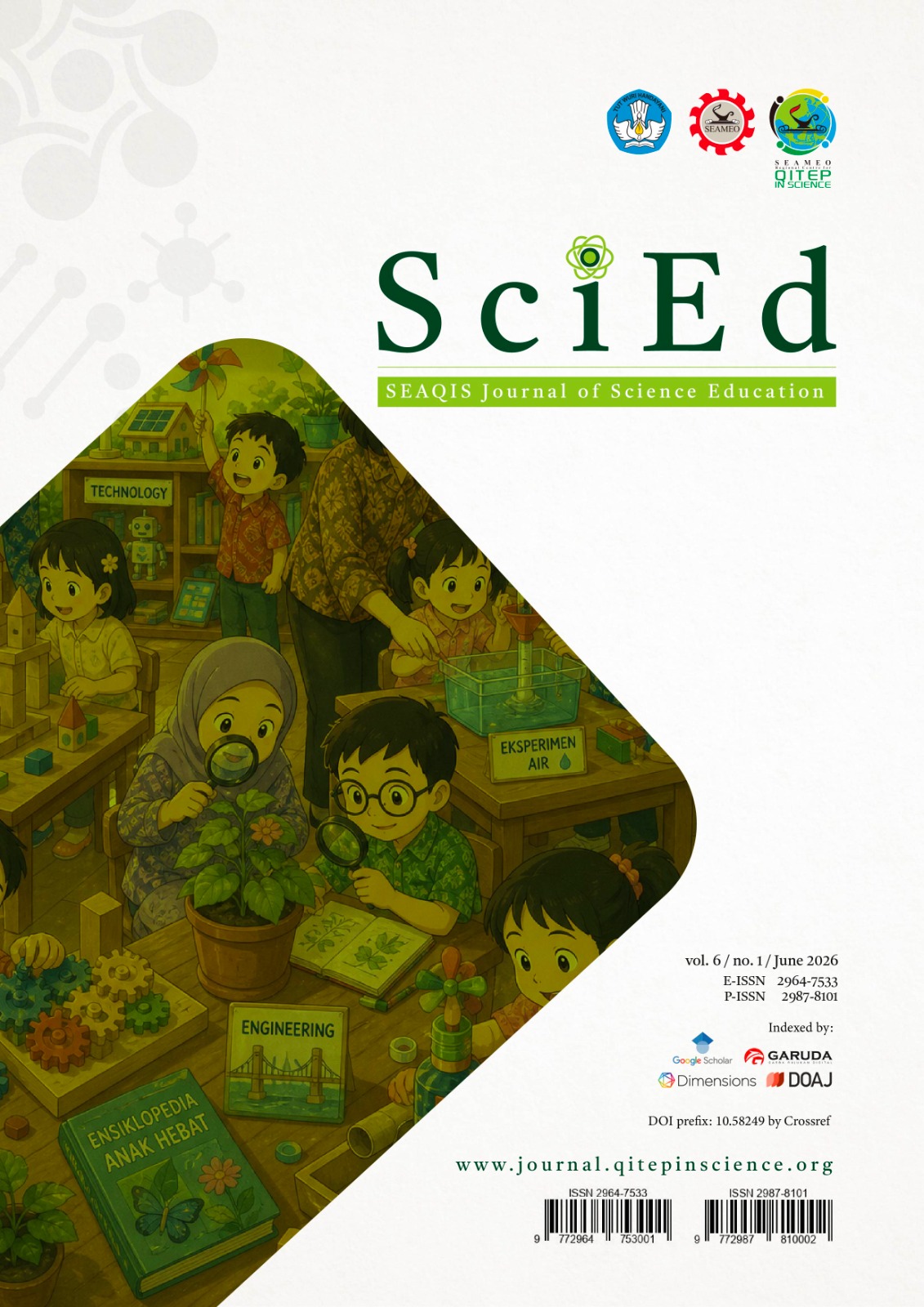
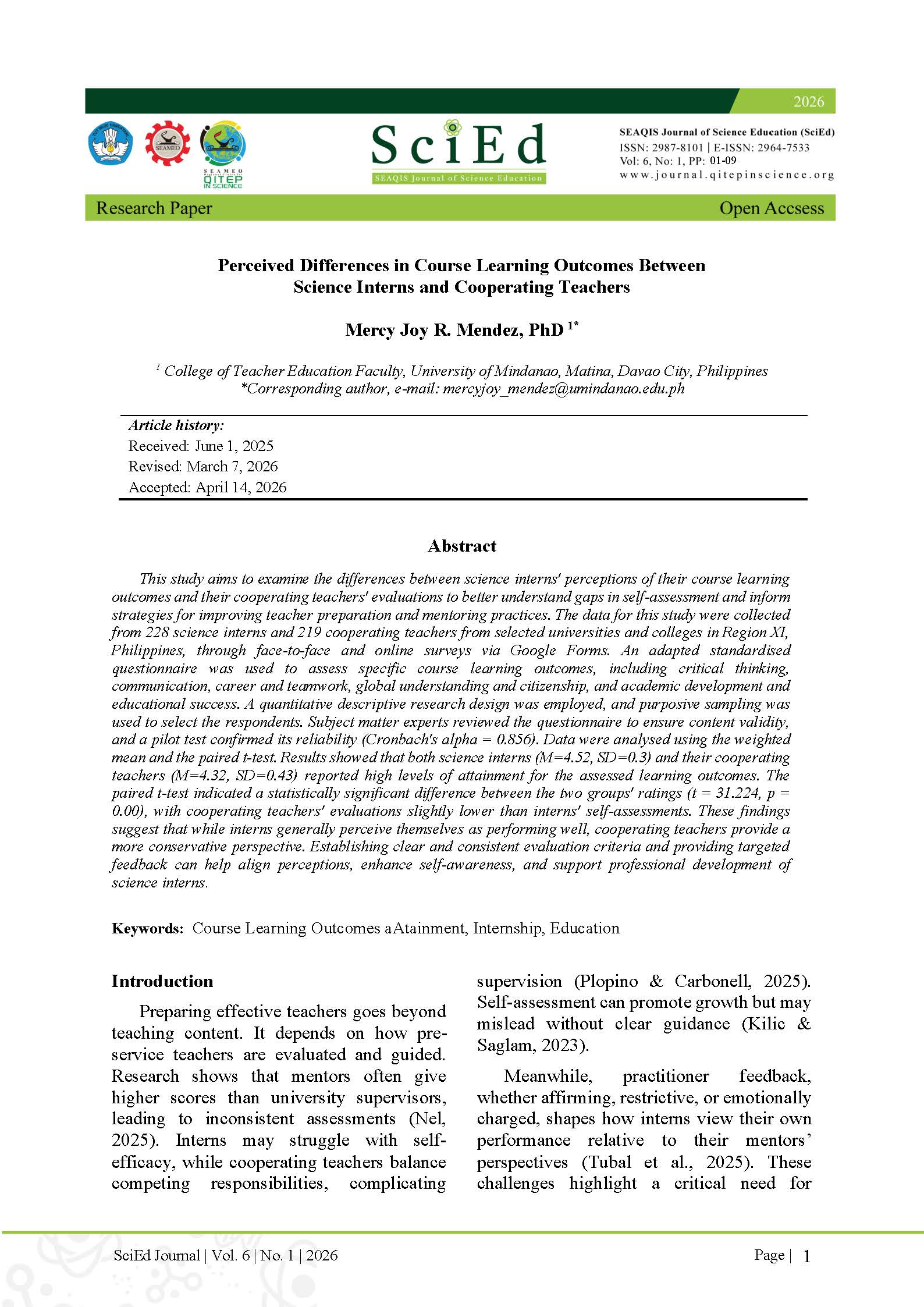
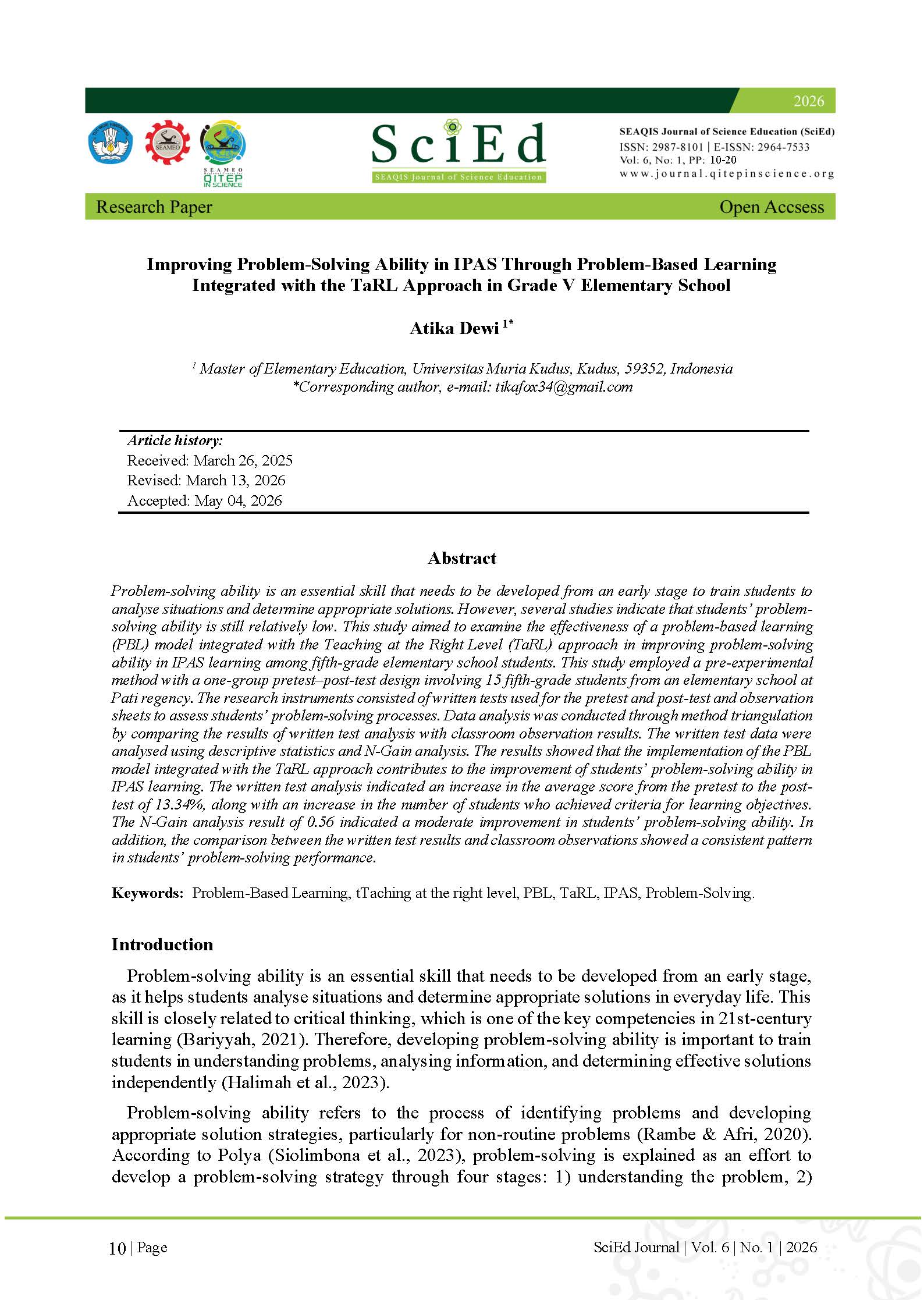
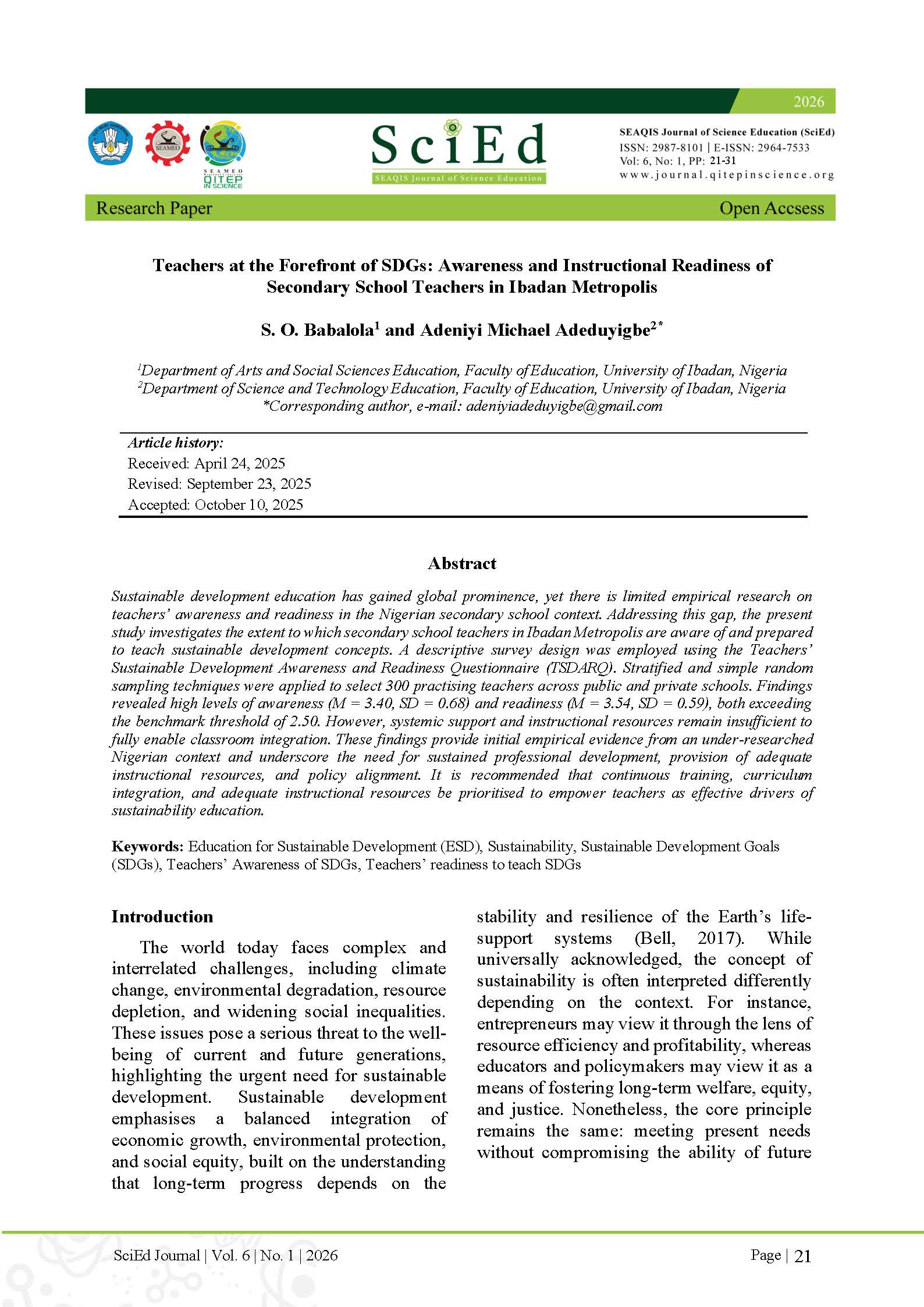
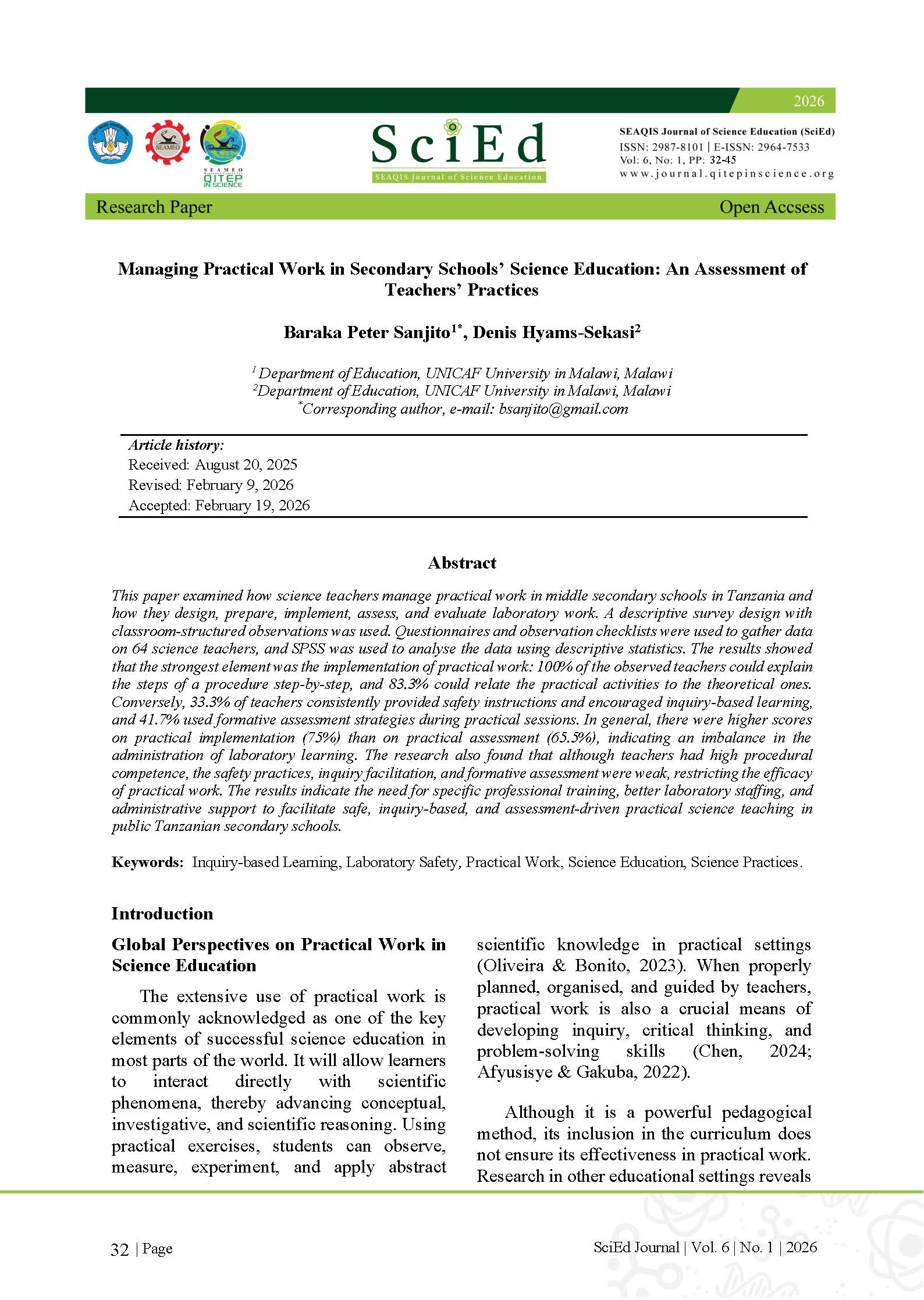
The SEAQIS Journal of Science Education Vol. 6 No. 1 (2026) showcases a rich compilation of scholarly works from diverse educational and cultural landscapes, featuring research from the Philippines, Indonesia, Nigeria, and Malawi. This edition highlights innovative, adaptive approaches across various levels of science education, featuring research on improving elementary students' problem-solving abilities in IPAS by integrating Problem-Based Learning with the Teaching at the Right Level (TaRL) approach, a scoping review on embedding solar cells, Arduino, and sensors within vocational science education, and an analysis of the perceived differences in course learning outcomes between science interns and cooperating teachers. It also includes critical discourse on the awareness and instructional readiness of secondary school teachers regarding the SDGs, alongside a practical assessment of how educators manage laboratory practical work in secondary schools. Collectively, these articles offer fresh, evidence-based perspectives that are valuable for educators, researchers, and policymakers aiming to foster meaningful, context-responsive science education around the globe.
Published:
2026-06-04
Full Issue
Articles

SEAQIS Director's Message
Alhamdulillah, praise to Allah, God Almighty, that SEAQIS with pleasure presents its science journal called SEAQIS Journal of Science Education (SciEd). This journal is devoted to the science education field from theoretical aspects to practical studies.
This journal is the authoritative voice in the science education field, covering the science curriculum, instruction, learning, policy, and science teachers' preparation to advance our knowledge of science education theory and practice. The journal focuses on the teaching and learning of science in a school setting ranging from primary school to secondary education.
This journal also may be a platform for teachers and education personnel to share their ideas and thought about the current issues in the science education world. We know that today science education is fundamental for growing our science literacy and nurturing the next generation of scientists. In this fast-paced world where technological and scientific advancements are made at an ever-increasing rate, scientific literacy is crucial to helping us make sense of the knowledge we receive.
We believe that all the papers published in this journal will significantly influence science education, and we thank all of the authors who contributed to this volume. Have a pleasant reading!
Mr Reza Setiawan